Why Your Paint Department Isn't the Problem
The real bottleneck may be how work is being released to Paint.
Ask almost any collision repair shop owner where the bottleneck is, and you'll probably hear the same answer:
"The paint booth."
It's an understandable conclusion. Nearly every repair order eventually passes through the paint department, making it one of the most utilized resources in the shop. Industry experts often recommend tracking booth cycles, refinish hours per cycle, and booth utilization to improve throughput. Those are valuable metrics, but they only tell part of the story.
The bigger question is this:
Why is there a line waiting for the paint booth in the first place?
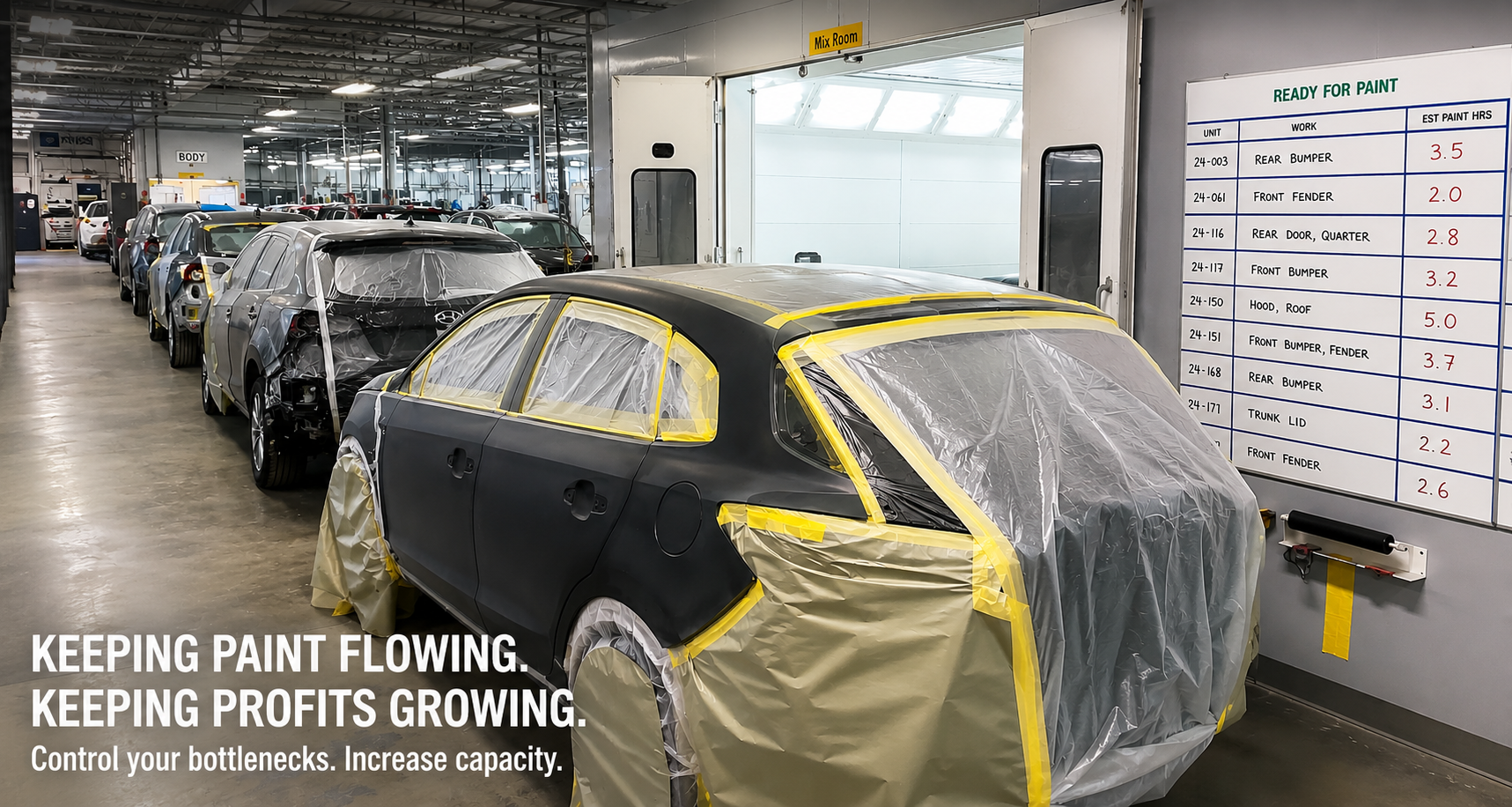
The Paint Booth Isn't Creating the Queue
The queue is being created upstream.
Every vehicle entering Paint Prep comes from the body department. In Lean manufacturing terms, the body department is the supplier, and the paint department is the customer.
When the supplier releases work faster than the customer can consume it, inventory builds. In a collision repair shop, that inventory is vehicles waiting for Paint Prep.
The paint booth didn't create the bottleneck. The production system did.
Stop Managing the Booth. Start Managing the Flow.
Many shops react to congestion after it occurs:
- The paint queue grows.
- The production manager starts expediting repairs.
- Body technicians are told to stop finishing certain jobs while painters work overtime trying to catch up.
- The entire shop begins reacting instead of following a controlled production plan.
A better approach is to manage the release of work into the paint department before the queue becomes excessive.
Think Like a Pull System
Lean production systems don't push work from one department to the next simply because it's finished. They release work only when the downstream process has capacity to accept it.
Imagine your paint department can comfortably process 80 refinish hours per day. If Body completes 120 refinish hours today, the extra 40 hours don't disappear. They become tomorrow's queue.
Repeat that for several days, and the paint department is buried under work while cycle time continues to increase.
The Missing Metric
Most management systems tell you where a vehicle is. Very few tell you whether the paint department is about to become overloaded.
What if your production manager could see:
- Refinish hours waiting for Paint Prep
- Current Paint Prep workload
- Available paint department capacity
- Days of paint work already in queue
- Early warning when Body is producing work faster than Paint can absorb it
Instead of asking, "How busy is the booth?" the production manager can ask a much better question:
"Can Paint accept more work today?"
That's the question that keeps production flowing.
A Smarter Way to Manage Production
The objective isn't to keep every department busy every minute of the day. The objective is to keep work moving.
When Body releases repairs at the same pace that Paint can process them:
- Paint queues stay under control.
- Work-in-process decreases.
- Cycle time improves.
- Production becomes predictable.
- Stress levels drop throughout the shop.
This is the difference between pushing work through a shop and managing flow. Tools like CR Visual Production Manager give production managers real-time visibility into every vehicle and every department, so developing queues are visible before they become crises.
Looking Ahead
At Collision Resources, we believe the future of collision repair scheduling isn't just about scheduling customer appointments. It's about intelligently managing the flow of work between departments.
When production managers can see developing bottlenecks before they occur, they can make better decisions, maintain continuous flow, and deliver more vehicles on time.
Because the goal isn't simply to keep the paint booth busy.
The goal is to keep the entire shop moving.
Wondering if your paint queue is a booth problem or a flow problem? Schedule a demo of CR Visual Production Manager or talk with a Collision Resources consultant today.
Subscribe to Our Newsletter
Interested in receiving more tips delivered directly to your inbox?

David McCreight is the Owner of Collision Resources and serves as President. Ultimately, David is categorically passionate about assisting auto body shop owners and managers to define and exceed their goals.


